
Compassion in a Cold World
The Man Who LaughsActs of practical kindness repeatedly emerge among the poor, even as institutions and comfortable households withhold help.
increasing Bearing strength in each event
 decreasing
Bearing strength in each eventdecreasingThe Town Refuses
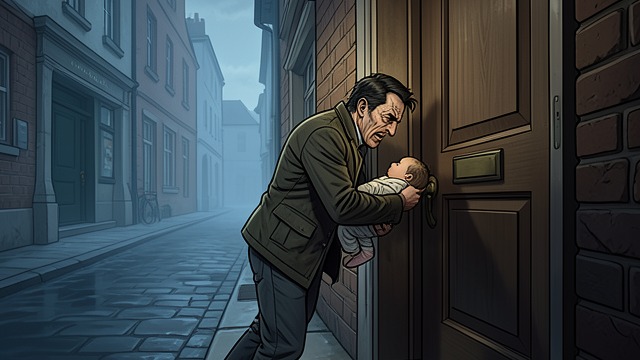
The Town Refuses
Help sought at doors
Gwynplaine knocks on a wealthy house and a poor hovel alike.
No one answers him while he carries the infant Dea.
The town’s inhabitants protect their sleep from an unknown child.
Warmth becomes indifference
The closed homes contrast with the cold outside.
Gwynplaine recognizes that human refusal hurts differently from winter.
The episode makes hospitality a moral rather than merely domestic question.
A Stranger Gives His Coat

A Stranger Gives His Coat
Sacrifice without calculation
Gwynplaine wraps Dea in his warm sailor’s jacket.
He continues into the storm with little protection of his own.
The act is the opposite of the Comprachicos’ treatment of children.
Kindness made concrete
He responds to another’s need before knowing her identity.
The rescue becomes the foundation of a lifelong relationship.
Compassion appears as action rather than sentiment.
Ursus Feeds the Foundlings
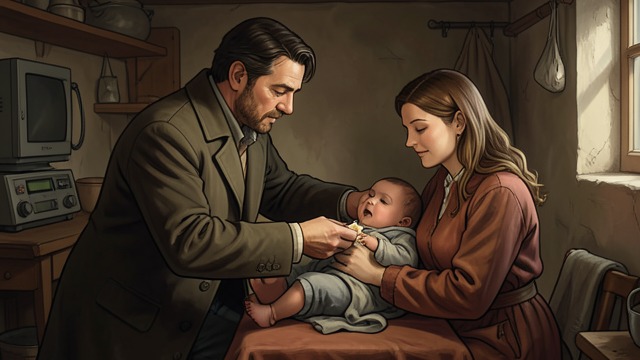
Ursus Feeds the Foundlings
Care masked by complaint
Ursus gives Gwynplaine food and dry clothes.
He feeds Dea with the milk he had intended for himself.
His angry monologue never interrupts his attentive care.
A practical mercy
Homo accepts the infant and licks her hand gently.
The small household offers what the town denied.
Kindness is shown through food, warmth, and continued responsibility.
A Benefactor’s Resentment
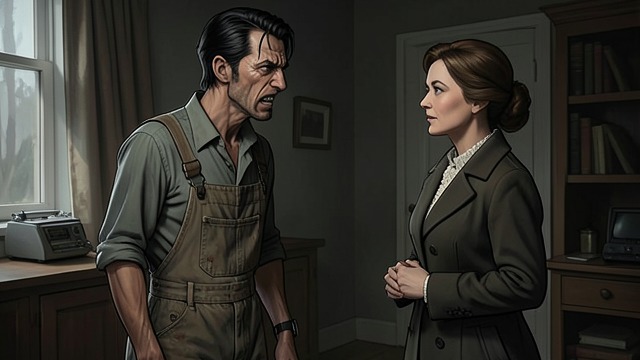
A Benefactor’s Resentment
Charity misread
Josiana gives Barkilphedro shelter and secures him employment.
He interprets the aid as an effort to bind and humiliate him.
The recipient converts kindness into a grievance.
Envy seeks repayment
Barkilphedro plots to wound the woman who helped him.
His story of injury excuses his deliberate malice.
The novel asks how generosity can become entangled with unequal power.
Kindness Without Victory
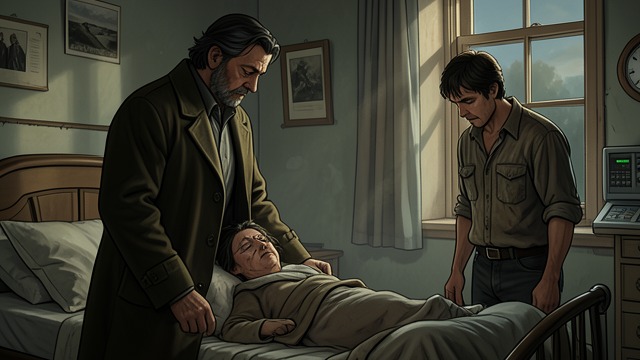
Kindness Without Victory
The household persists
Ursus protects Dea through exile and watches over her illness.
Homo guides Gwynplaine back to the ship.
The family’s care continues even after its public life is destroyed.
Compassion meets limits
Dea dies despite Ursus’s attention and Gwynplaine’s return.
The two men survive her only briefly as a family.
The novel values kindness without pretending it can defeat mortality.
During Gwynplaine’s night crossing through Weymouth
On the road from Portland to Weymouth
Before dawn at Ursus’s van
During Barkilphedro’s rise at court
During the final voyage and its aftermath
